It feels rather ironic to be planning a workshop called “Radical Safety in a Dangerous World,” which I am due to deliver in May while war quite literally rages outside the house.
As I think about how to build security and resilience within families and communities, I am hearing the distant booms of missiles being intercepted. Every so often, the siren sounds and I have to stop my work to gather the children and enter the bomb shelter.
Here in Israel at the moment, “Radical Safety in a Dangerous World” is not just a theoretical question.
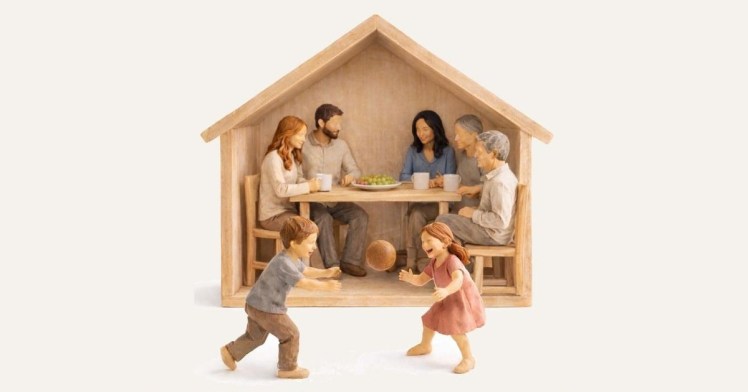
The main idea I will be sharing in my workshop is that building healthy, stable families and communities is not just a private matter that happens behind closed doors. During times of political instability, strong families become a matter of national security.
In the workshop, I will touch on the science of early childhood attachment — how relationships infants and young children form with their caregivers are foundational to their sense of identity and have profound effects on emotional and physical health across the lifespan.
Infants learn to regulate their stress responses through nurturing touch and attuned care. They internalise a sense of security when their early relationships are stable and consistent. These relational processes build resilience and help protect against the adverse effects of traumatic experiences right the way through into adulthood.
I will also talk about how neglect or abuse, and disruptions in early relationships, can make people more vulnerable to the effects of stress and trauma later in life. When children grow up without consistent safety and attuned care, their nervous systems can become more reactive to threat. They may carry a deeper sense of fear or insecurity and find it harder to recover after adversity.
These early experiences do not simply disappear with time. They can shape how a person responds to pressure throughout life — including in extreme environments such as the battlefield. Studies of military veterans have found that soldiers who experienced abuse, neglect, or instability earlier in life may be more likely to develop symptoms of post-traumatic stress after combat.
As we go through another period of intense warfare around us here in Israel, I find myself thinking practically about how to maintain emotional safety for our family in the midst of the danger outside.
In these moments, I have found that a sense of safety is built through simple, steady rhythms: keeping routines where we can, particularly eating together as a family, cooking with the children, reading with them, and keeping up simple learning activities; making space to talk about fears while still holding on to strength and resilience. I am also mindful of my own limits — taking rest when I need it, loosening some expectations while trying not to let everything unravel.
As we contend with the war here in Israel, I am also mindful of the families in Iran. Just like here, there are parents trying to protect their children and create a sense of safety while living with deep uncertainty and fear. The ultimate outcome of this war will depend just as much on the strength and resilience of these families as on military might. In the long run, it is the people of the country themselves who shape the kind of future that emerges after conflict.
Even though I hate the human cost of war and the suffering inevitably borne by innocent people, I support the current US-Israeli military operation against the Iranian regime. I believe that in circumstances like these, war is necessary to confront dangerous powers, hold regimes to account, and protect innocent lives.
But I also believe that while weapons may defeat armies, they cannot build peace.
I have seen what happens to societies that live through generations of war and violence. War does not end when the weapons fall silent. It leaves deep psychological and social wounds that are often carried from one generation to the next.
When large numbers of people are living with unresolved trauma, it becomes harder to build stable, healthy families and societies. Fear and insecurity can make communities more reactive, more rigid, and less able to listen to one another.
We can see these dynamics in many places that have endured long cycles of violence. Some of the sharp divisions and rigid ideologies we see here in Israel have their roots in trauma.
In Gaza, generations have grown up in the shadow of hatred, oppression, and conflict. The psychological effects of this history leave a deep imprint on Gazan society today, creating a climate of volatility and mistrust and providing fertile ground for radical ideas and extremism to grow.
The truth is that any society shaped by deeply ingrained trauma — where children may grow up without secure and stable attachments — will struggle to produce the foundations of a peaceful and stable society.
Peace needs to be built slowly and intentionally, brick by brick.
Real peace does not come from ceasefires or political agreements. It grows when nervous systems begin to settle, when trauma is processed and integrated, and when people are able to move forward without living constantly in survival mode — work that begins in the quiet spaces of family life where children grow up with safety and stability.
I believe that the very deepest peace is found “under the shadow of the Almighty” (Psalm 91:1). In God’s presence, our bodies, minds, and spirits can truly rest. Abiding in this place gives us the inner stability we need to navigate conflict and turmoil in the world around us.
When modern societies deny their need for God, they can easily drift into a kind of existential anxiety, cut off from their deepest source of security and meaning — “a rock that is higher than I” (Psalm 61:2).
Faith communities naturally and quite rightly put a strong emphasis on family values and understand the deep connection between strong families and stable societies. God’s Word shows us what relationships look like when they embody the grace of God and His “peace… which surpasses all understanding” (Philippians 4:7). In these families, children are deeply valued and nurtured. Marriages are places of dignity, cooperation, and mutual understanding. Healthy boundaries and an ability to express and resolve conflict become part of the fabric of families and communities built upon biblical principles.
But faith communities must take care to remain rooted in the living presence of God. When they are abiding in His peace and operating out of His rest, grace flows naturally. But when anxiety begins to take root, control can subtly take the place of peace.
When anxiety replaces security in faith communities, the focus can shift from authentic relationships where it is safe to be vulnerable towards an emphasis on how things appear. Honesty and trust can be replaced by a pressure to look spiritual on the outside, whatever might be happening underneath. Anxious control within believing families can lead to a heavy theological emphasis on female submission within marriage and expectations of obedience from children, even to the point of harsh discipline.
These sorts of families, though they may look attractive on the surface, do not embody a sense of safety and will not help to create a stable society. Sadly, they are more likely to contribute towards cultures of secrecy and shame where domestic violence and child abuse can quietly take hold.
Here in Israel, even as the sirens sound and the booms reverberate in the distance, I am deeply grateful to know healthy relationships and authentic community life. I am grateful for friends I can cry with, people with whom I can share honestly without needing to hide or perform. I am grateful that my children are growing up within relationships where they are loved, protected, and able to be themselves. Even during this war, I have experienced what radical safety can look like through the relationships within my own family and our wider community.
Radical safety is not created by the absence of external danger. It grows wherever people are able to live authentically with one another, rest in the peace of God, and build families and communities where the next generation can grow up knowing what safety, dignity, and love truly feel like.
 Higher Than Me